PLANTS | ANIMALS | ECOLOGY | FUNGI | GEOLOGY | GARDENING | TOOLS
MEXICAN PLANTS & ANIMALS HOME

Excerpts from Jim Conrad's
Naturalist Newsletter
from the December 30, 2005 Newsletter written at Hacienda San Juan Lizarraga one kilometer east of Telchac Pueblo, Yucatán, MÉXICO and issued from Hotel Reef Yucatan 13 kms to the north
THE BIRDS OF CHRISTMAS
On Christmas morning as soon as it was light enough to walk around I carried my breakfast makings into the center of the rubble heap next to the building where I sleep. The rubble is what's left of the big structure where once they milled henequen but it was destroyed by a hurricane and now nothing remains of it but one wall with useless, high-hanging doors and windows, and lots of rubble. I make my campfire amidst the rubble because there's less chance there that my fire will escape. At 6AM it was 64°, foggy, and the sky was just light enough for me to see that it was going to be blue. A fine day was dawning and the fog's chilly wetness felt good.
While I composed the campfire the sky lightened minute by minute, the fog grew denser, and the morning chorus of birdsong began. These are the species I noted, in the order they came to me:
16: SOUTHERN HOUSE-WREN brown and plain-looking as can be bubbly-singing from inside the rampant Bougainvillea wall
17: NORTHERN PARULA, little warbler gray, yellow and white, quietly but assiduously gleaning bugs inside a strangler fig tree astride a white limestone wall
18: RUFOUS-BROWED PEPPERSHRIKE like an overgrown yellow vireo with rust-red eyebrows belly-laughing its descending whistle from neighboring citrus orchard
19: INDIGO BUNTINGS, five of them, chubby, brown and nervous like sparrows in tall grass, the males looking like they're breaking out in blue measles
20: ROSE-BREASTED GROSBEAK at tip-top of Ceiba tree in brown juvenile plumage but issuing sharp PEEK call like a rosy-breasted adult
21: WHITE-EYED VIREO with yellow spectacles, white throat but no white eyes stealthily calling from dense bushes just as if he were in a Mississippi summer
22: CATTLE EGRETS, three of them, flying over, white spots in blue sky, nice curved necks, graceful, graceful, graceful
23: BLUE-GRAY GNATCATCHER like tiny gray mockingbird sometimes calling a thin, buzzy CHEEE, foraging for bugs in a Neem tree
24: PALM WARBLER mostly yellow with a bright yellow rump above its nervously wagging tail silently but assiduously gleaning bugs inside a Neem tree
25: GREAT HORNED OWL perching silently and greatly, even ponderously, a black silhouette in deep shade inside a Neem tree
27: YUCATAN JAYS, six of them, noisily complaining from fire-killed tree snags rising in seriously weedy cornfield near hacienda, and every cornstalk has been broken halfway up so that the stalk's top part hangs straight down, the ears thus pointing earthward so rain can't enter, and this is the way this farmer dries his ears of corn before picking them, but I think that this way the jays and raccoons get their share
28: BLACK VULTURE soaring now that the morning breeze is getting up
29: RUBY-THROATED HUMMINGBIRD looks like he's gathering spiderlings whose ballooning gossamers have caught in the cornfield's snaggy dead trees
30: TURKEY VULTURE soaring over henequen field
31: SHARP-SHINNED HAWK fast soaring over henequen field like kite on stiff breeze drifting southward
Amazing how by 9 AM nearly all birds just stop singing and start lying low. When I return to my casita at 10:30 AM it's 82° and a good breeze keeps the windmill busy. I stand there watching its blades whir and its piston makes a good beat and I'm thinking this has been a pretty good Christmas Day.
*****
BIRD-STARS OF CHRISTMAS DAY
Of the above 31 species, probably the prettiest and "most exotic" was the Turquoise-browed Motmot, which I see several times every day and you can see at http://ontfin.com/Fav/TBMO2.htm.
The most rarely seen here was the Sharp-shinned Hawk, a very small accipiter often spotted in Mississippi, but visiting here only during the winter. See him at http://www.ownbyphotography.com/newpage93html.htm.
The only Yucatan-Peninsula endemic species was the Yucatan Jay, which you can see at http://www.mangoverde.com/birdsound/picpages/pic189-16-2.html.
The kind of bird that you as a Northerner probably have heard about least was the peppershrike. You can see the Rufous-browed Peppershrike at http://www.mangoverde.com/birdsound/picpages/pic195-51-2.html.
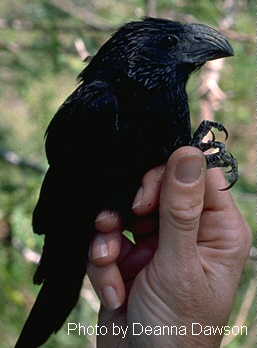
Maybe the weirdest looking bird was the Groove-billed Ani, because of his thick, curved and grooved, Jimmy Durante beak. I'm not sure what the bill's grooves do. There's another ani species in southern Florida and the Caribbean called the Smooth-billed Ani and it does very well without grooves. You can see our groove-billed one at http://www.mbr-pwrc.usgs.gov/id/htmsl/h3840pi.jpg .
In the above list, nine of the 31 species are winter visitors -- 29%. When you think about it, it's quite a change when a neighborhood is enlarged nearly a third by visitors from the outside.